
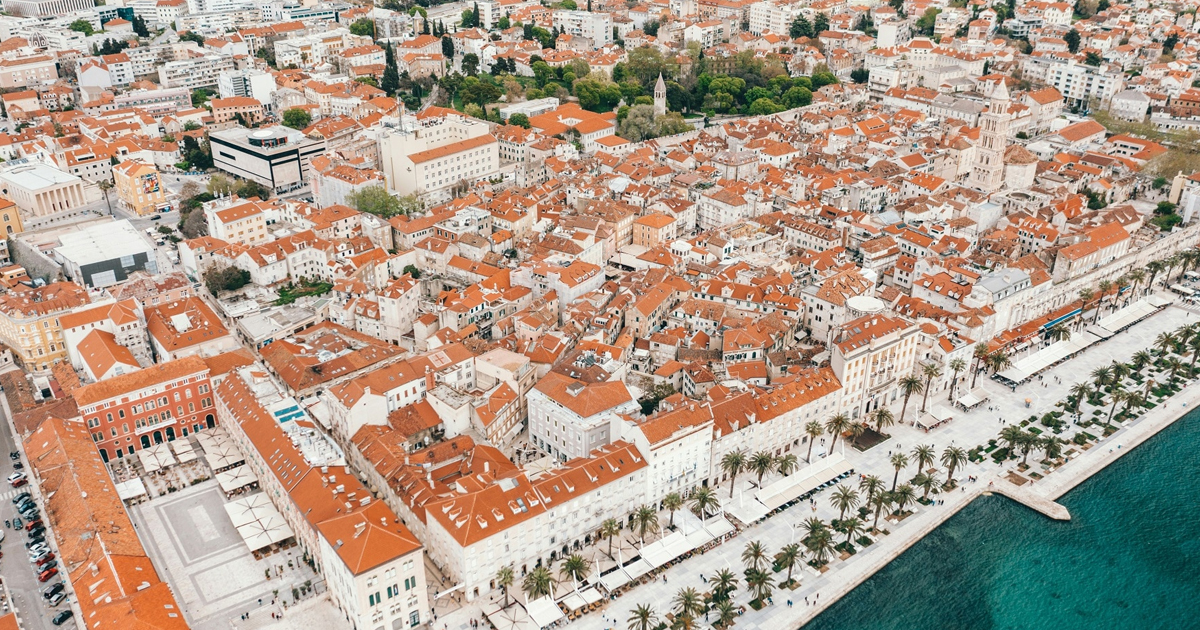
Located in the heart of Split, Croatia, Diocletian’s Palace stands as one of the most well-preserved monuments of Roman architecture and history. Built at the turn of the 4th century AD, this grand structure offers a fascinating blend of history, culture, and urban life. Not just a palace, it was designed as a fortified town, making it a unique testament to the Roman Empire’s blend of utility and grandeur. In this blog, we will explore the history, architectural significance, and the modern charm of Diocletian’s Palace.
A Glimpse into History
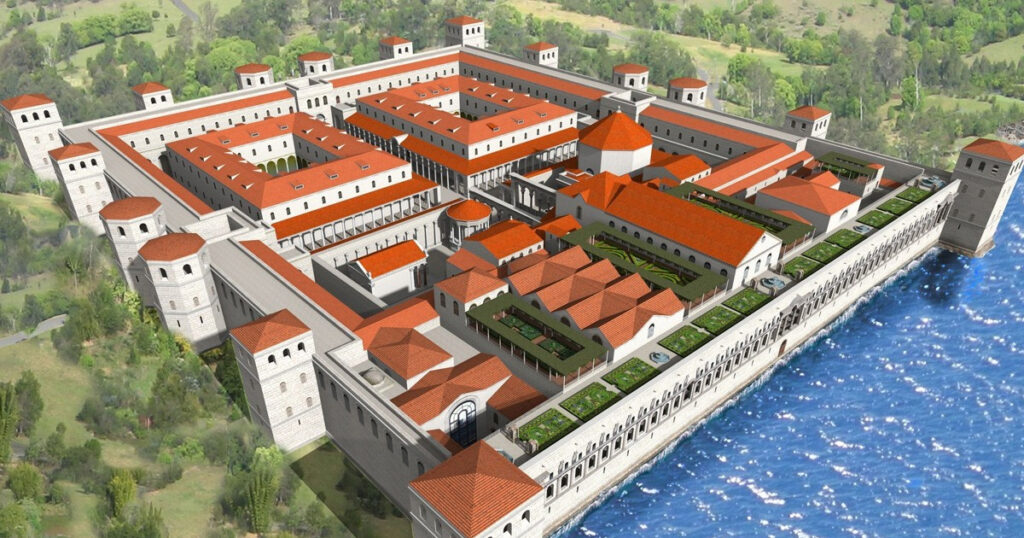
Emperor Diocletian, one of the most powerful Roman emperors, commissioned the palace around 295 AD, intending it as a luxurious retirement home after he abdicated the throne in 305 AD. Diocletian is known for his sweeping reforms and for stabilizing the empire during a period of internal turmoil. The palace was his attempt to merge military, residential, and sacred spaces into a massive, self-contained complex.
After the fall of the Western Roman Empire, the palace continued to serve as a refuge. It became a vital part of Split’s medieval history when local inhabitants repurposed its buildings, incorporating them into the city’s fabric.
Architectural Marvel
Diocletian’s Palace is a stunning blend of military camp (castrum) and a luxurious Roman villa. Covering an area of 30,000 square meters, the palace originally consisted of four gates, massive walls, and a blend of living quarters, religious buildings, and open courtyards. It is enclosed by strong stone walls, some of which reach 20 meters in height. The layout was roughly rectangular, with two main streets crossing the complex, dividing it into four sections.
Key architectural highlights of the palace include:
- Peristyle: A grand central courtyard surrounded by colonnades, where Diocletian made his public appearances. The Peristyle is still one of the most iconic spaces of the palace.
- The Emperor’s Mausoleum: Diocletian was one of the few emperors to build his own mausoleum. Interestingly, it was later converted into the Cathedral of Saint Domnius, Split’s patron saint.
- Vestibule: The circular, domed entrance hall leading into the imperial apartments, offering an impressive example of Roman engineering and architectural finesse.
- Temple of Jupiter: Once dedicated to the Roman god Jupiter, this small but elegant temple is now the Baptistery of St. John.
The Palace Today: A Living Monument
Unlike many ancient Roman ruins, Diocletian’s Palace is not just a static monument. It forms the historical core of the city of Split, with shops, homes, restaurants, and businesses still bustling within its walls. Its narrow stone-paved streets, hidden alleyways, and open courtyards create a captivating fusion of past and present. Walking through the palace today feels like stepping back in time, while simultaneously experiencing the vibrancy of modern life.
Every summer, the Peristyle becomes a stage for cultural performances, from operas to traditional Croatian klapa music. The atmosphere at night, especially when the square is illuminated, offers an almost magical experience, blending history and modern culture seamlessly.
The Palace’s UNESCO World Heritage Status
In 1979, Diocletian’s Palace was designated a UNESCO World Heritage site, recognized not only for its historical and cultural significance but also for how it has been integrated into the everyday life of Split. The unique way that modern life flows through this ancient structure is one of the reasons why it stands out among other Roman ruins across Europe.
What to See When Visiting Diocletian’s Palace
- Peristyle Square: The heart of the palace, where you can marvel at the ancient columns and soak in the atmosphere.
- Saint Domnius Cathedral: A mix of Romanesque and Gothic architecture built over Diocletian’s mausoleum.
- Substructures of the Palace: The underground chambers, once used for storage, now host art exhibitions and offer insight into the original palace layout.
- Golden Gate (Porta Aurea): One of the four main gates, it offers an impressive entrance to the palace.
- Temple of Jupiter: Take in the detailed carvings and visit the baptistery.
- Riva Promenade: Just outside the palace walls, this lively seafront area is ideal for relaxation after exploring the palace.
Conclusion
Diocletian’s Palace is more than just an ancient ruin; it is a living monument that has stood the test of time. It has been at the center of Split’s urban life for over 1,700 years, a place where history breathes through every stone. Its combination of military, residential, and religious architecture showcases the best of Roman engineering and provides visitors with a unique journey through centuries of history. Whether you’re a history buff, an architecture enthusiast, or just looking for a picturesque place to explore, Diocletian’s Palace is an unmissable destination.